
Cavity treatment
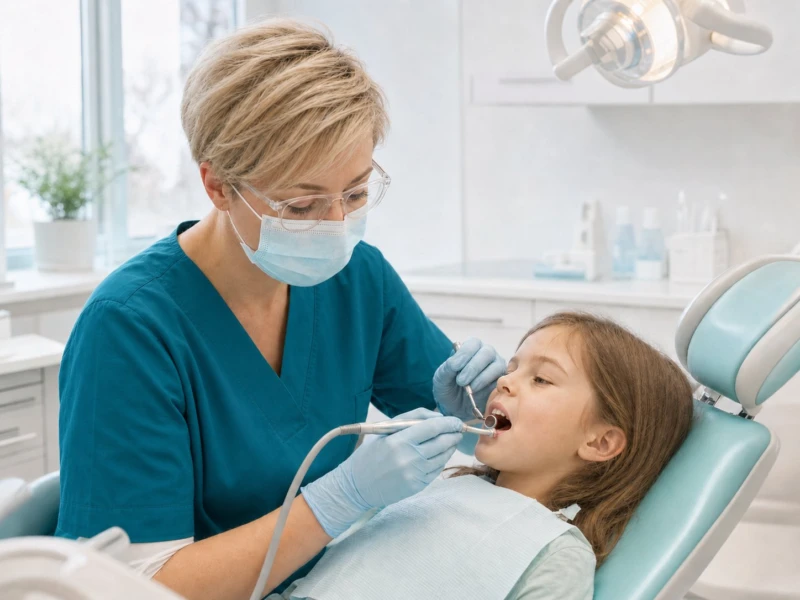
Tooth decay in children develops quickly, especially in baby teeth, so it is best treated as soon as it is found. The dentist explains each step to the child, numbs the area and places a filling that restores the shape of the tooth. Baby and permanent teeth need different materials and a different approach.
When to book treatment
- A dark or whitish spot has appeared on a tooth
- The child complains of pain from sweet, cold or hot food
- A cavity or chip is visible in the tooth
- Food keeps getting stuck in the same place
- A tooth aches by itself or ached at night

How the visit goes
-
Examination and diagnosis
The dentist examines the tooth, orders an X-ray if needed and explains what was found.
-
Numbing
The area is numbed so that the child feels no pain. Before that, the dentist shows how it will go.
-
Removing the decay
The dentist removes the affected tissue and cleans the cavity.
-
Filling and advice
The tooth is restored with a filling, the dentist checks the bite and explains how to care for the tooth.
Treatment types and prices
-
Filling in a baby tooth
When decay has reached a baby tooth
The dentist removes the decay and restores the tooth with a material suited to baby teeth. Treatment takes one visit.
- Keeps the tooth until it falls out naturally
- Protects the permanent tooth bud from infection
- Done with pain relief
from 250 zł
-

Filling in a permanent tooth
When decay has reached a permanent tooth
A durable filling material is chosen for a permanent tooth, and its shape is restored with the bite in mind.
- Restores the shape and function of the tooth
- The filling is matched to the tooth colour
- The dentist checks the bite afterwards
from 320 zł
-

Pulp treatment
When the nerve of the tooth is inflamed
The dentist removes inflamed tissue from the tooth, cleans the canals and seals them. The visit takes place with pain relief.
- Relieves pain and inflammation
- Makes it possible to keep the tooth
- The tooth is restored with a filling afterwards
from 450 zł


Questions about treating tooth decay
About pain relief, baby teeth and how long treatment takes.
Does treating a child’s teeth hurt?
Treatment is done with pain relief, so the child feels no pain. Before the injection the dentist applies a gel and explains what will happen.
Do baby teeth need treatment?
Yes. Decay in a baby tooth can spread to neighbouring teeth and damage the permanent tooth bud, and losing a tooth early affects the bite.
How often should teeth be checked so decay isn’t missed?
Usually every six months. A routine check-up finds decay early, when treatment is simpler.
How long does treating one tooth take?
Most often one visit of 30 to 60 minutes. Harder cases, for example pulp inflammation, may need several visits.
What if the child is afraid of treatment?
It can start with an adaptation visit, and with strong anxiety treatment under sedation can be discussed. The dentist will suggest a suitable option after the examination.
Can a child eat after treatment?
After a filling and pain relief it is better to wait until the numbness passes, so the child doesn’t bite the cheek or tongue. The dentist says when eating is fine.