
Check-up and prevention
Professional hygiene removes plaque and tartar that a home toothbrush can't, and helps teeth stay healthy between check-ups. The dentist examines the teeth and gums, chooses a cleaning method to suit the child's age and the condition of the teeth, and shows how to keep the result at home.
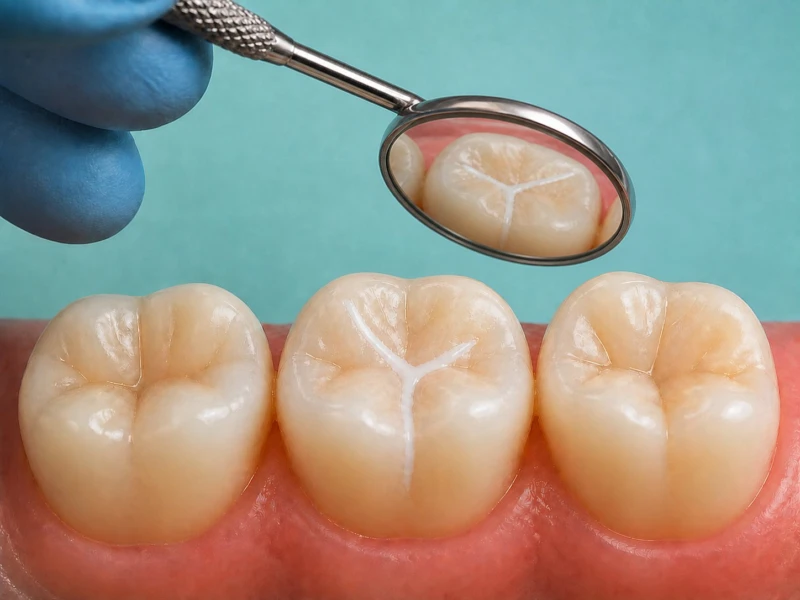
When to book a check-up and cleaning
- Plaque stays even after brushing at home
- Dark spots or marks have appeared on the enamel
- Gums are red or bleed when brushing
- The child wears braces or has recently had them removed
- The child is afraid of the dentist, so the visit starts with getting acquainted
- It's time for a routine visit

How the visit goes
-
Meeting and examination
The child meets the dentist and sees the room. Then the dentist examines the teeth and gums.
-
Cleaning
The dentist removes plaque from the tooth surfaces. The method is chosen after the examination.
-
Strengthening the enamel
If needed, the dentist applies a protective product to the teeth.
-
Tips for home
The dentist shows which areas need more attention when brushing and answers parents' questions.
Cleaning methods and prices
-
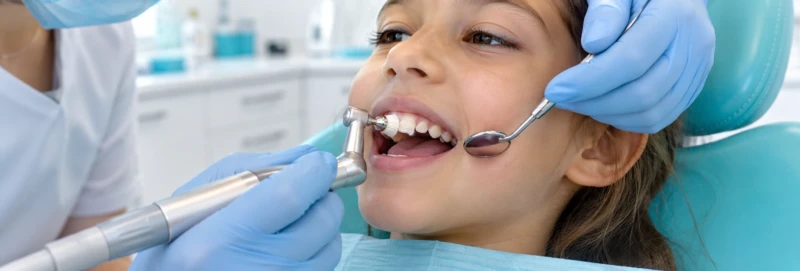
Gentle cleaning
For routine cleaning and a first introduction to the procedure
Soft plaque is removed with a rotating brush and low-abrasion professional paste, then the teeth are polished. The procedure is quiet, without loud sounds.
- Removes soft plaque and staining from the surface
- Well suited to a child's first cleaning
- Polishing smooths the teeth, so plaque builds up more slowly
from 120 zł
-
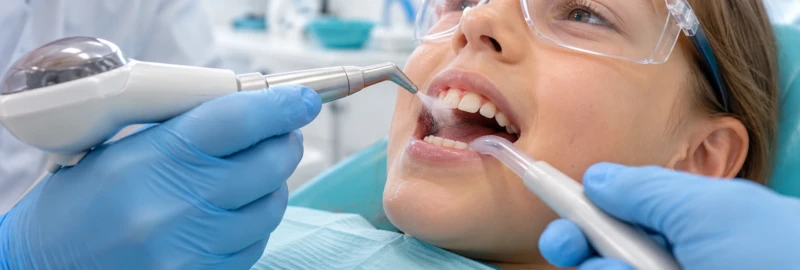
Air Flow
When there is plaque and staining, including around braces
A jet of water, air and fine powder removes plaque and staining from tooth surfaces and hard-to-reach spots. Gentle powders are used, for example glycine or erythritol based.
- Cleans well around braces and in grooves
- Works without vibration or grinding
- Teeth feel smooth and clean afterwards
from 200 zł
-
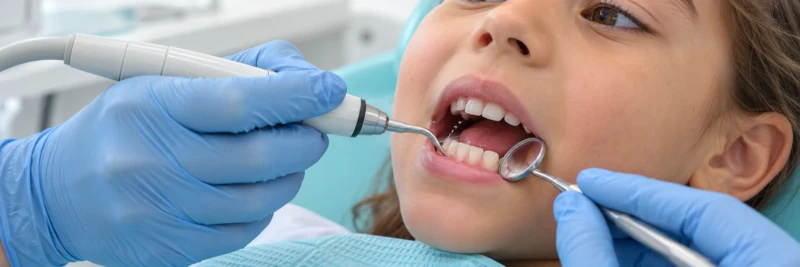
Ultrasonic scaling
When there is tartar
An ultrasonic tip with water cooling breaks up hard deposits and rinses them away. It's done when indicated, and the dentist decides after the examination.
- Removes tartar that brushing can't
- Reduces gum inflammation caused by deposits
- The dentist pauses if the child is uncomfortable
from 180 zł


Questions about cleaning
About preparation, sensations and aftercare.
Does a child need to be prepared for cleaning?
No special preparation is needed. It is enough to brush the teeth at home as usual and calmly explain that the dentist will look at and clean them.
Does cleaning hurt?
Cleaning usually doesn’t hurt. It can tickle or feel unusual because of the sound of the instruments. If the gums are inflamed they may be sensitive, so the dentist works gently and pauses.
How long does the visit take?
Usually 30 to 60 minutes including the examination and tips for home. The time depends on the amount of plaque and the child’s mood.
Can a child eat and drink after cleaning?
Water is fine straight away. If a protective product was applied, the dentist will say how long to wait before eating. In the first hours it’s better to avoid hard and staining food.
How often is professional cleaning needed?
Most often every six months, together with a routine check-up. The dentist may suggest a different interval depending on the condition of the teeth.
Can a parent stay in the room?
Yes, a parent can stay in the room. The dentist will suggest how best to support the child during the procedure.